


Announced in 1947 by U.S. Secretary of State George C. Marshall, The Marshall Plan was a massive program of financial assistance to help rebuild war-torn Europe, restore production, stabilize currencies, and prevent the much-feared spread of communism. Between 1948 and 1952, the United States provided over $13 billion (around $160 billion in today’s dollars) to Western European nations, fostering not only economic recovery but also the institutional foundations of what would become the European Union.
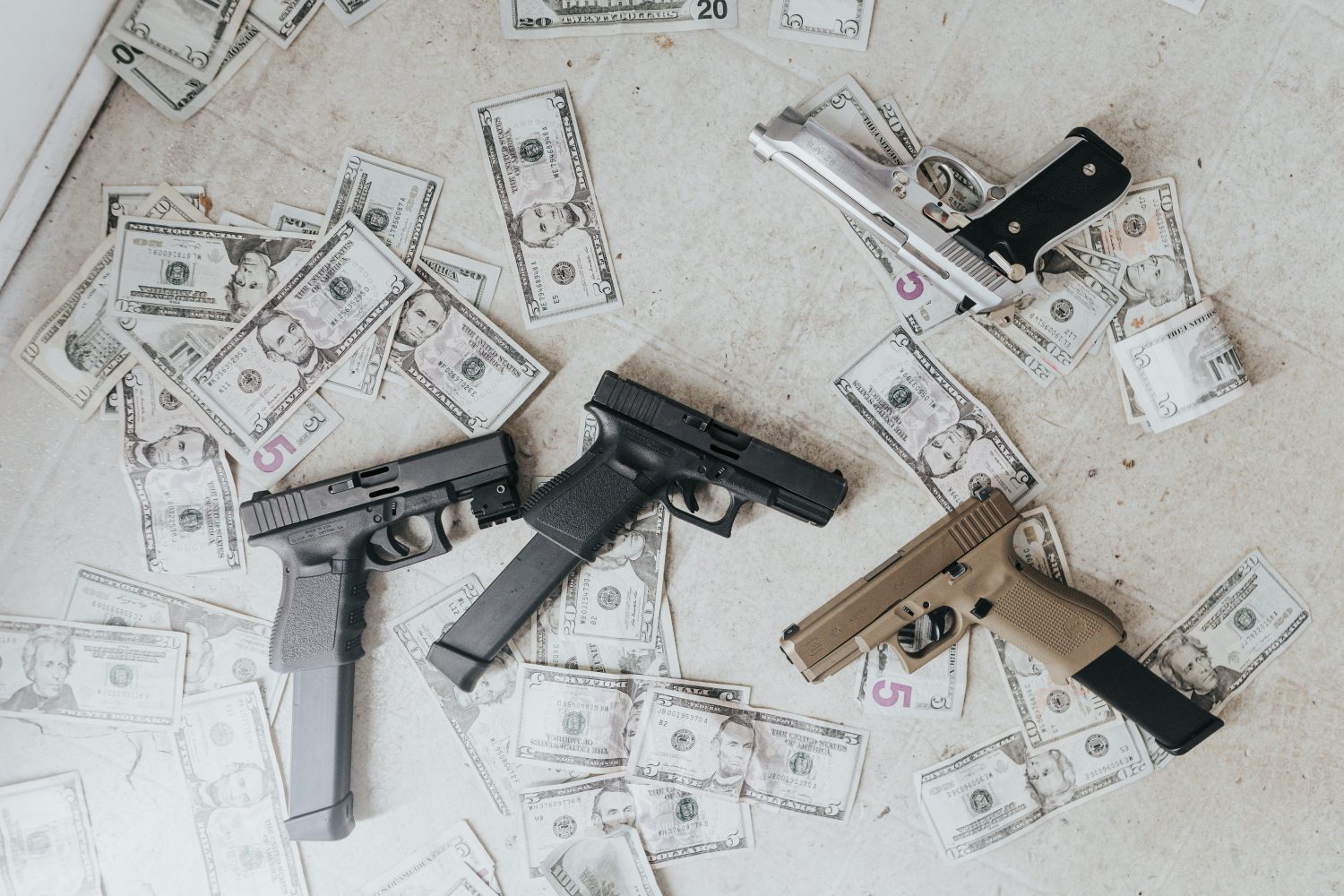
The Marshall Plan represented a bet that investment in infrastructure could secure the material foundations of democracy. To be sure, Spain was excluded from its original version, precisely because its political regime was not democratic. Today, however, the transatlantic relationship has inverted that premise. What is being put in place is a reverse Marshall Plan: not the United States rebuilding Europe, but Europe financing the United States—more precisely, underwriting its military-industrial complex through massive purchases of American arms, justified by the war in Ukraine. And now Spain is a lonely voice of opposition, reluctant to increase military spending to 5% of GDP. A model of aid in the service of sustaining peace has become the model of spending for the sake of perpetual militarization, with massive financial flows also reversing course and flowing to the U.S.
This transformation is not accidental. It follows the deep logic of contemporary capitalism, which, deprived of traditional avenues of productive growth, turns to war as the most reliable instrument of Keynesian stimulus. War and preparations for its expansion become the ultimate mechanisms of state-led public investment. As European governments scramble to arm Ukraine and replenish their own depleted stockpiles, they are engaging in an immense program of deficit spending. Only the beneficiaries are not their own citizens, but the U.S. arms industry, and the extreme right that is on the rise thanks to the dismantling of the welfare state.
According to recent data from the Stockholm International Peace Research Institute (SIPRI), American arms exports to Europe more than tripled in the period 2020–2024 compared with 2015–2019; European NATO members alone accounted for 64% of their arms imports from the U.S. in the more recent period, up from 52% earlier. Europe now accounts for about 35% of all U.S. arms exports, overtaking the Middle East for the first time in decades.
At the heart of this new dependency lies a regime of technological gatekeeping. The United States and a few of its defense giants maintain an effective monopoly over high-tech weapons systems—stealth aircraft, missile guidance, satellite networks, secure communications—ensuring that even the most affluent European states remain clients rather than co-developers. Export controls under the International Traffic in Arms Regulations (ITAR) prevent technology transfer without U.S. consent, while the Pentagon’s Foreign Military Sales system locks buyers into decades-long maintenance and training contracts, similar to how Monsanto forces farmers to buy sterile seeds on an annual basis. This monopoly ensures profits flow back across the Atlantic, while preserving American leverage over the operational sovereignty of European militaries. The dependency is structural and deliberate: a technological architecture that binds allies as permanent consumers of security rather than autonomous producers of it.
Hiding behind the frame of defensive necessity and moral obligation is a massive public investment regime, channeling European fiscal resources into arms systems predominantly sourced from the United States. To a large extent, the money is redirected from the so-called Green Transition, as much as from public healthcare and education programs. The economic function of arms-led spending mirrors Keynesian stimulus, with a twist: it is not aimed primarily at uplifting civilian infrastructure or the welfare state, but at arming, rearming, and maintaining war-readiness. As Ukraine resists, Europe’s governments, fearful of Russia’s threat and pressured by alliance politics, have found justification for expanding budgets and suspending fiscal conservatism.
The moral rhetoric of solidarity conceals a massive transfer of public wealth from European taxpayers to U.S. corporations. The purchase of F-35 jets, missile defense systems, long-range missiles, etc., often means payments made abroad: labor, profit, and industrial investment that benefit U.S. producers and workers less than the European industrial autonomy. Meanwhile, European publics must absorb not only the cost but also the consequences: opportunity costs (what else could that money have done?), dependence (on U.S. arms supply chains), and political risk.
To expose this logic is not to deny the justice of Ukraine’s resistance. Ukraine fights for its existence, not for economic abstraction. But precisely because the stakes are existential for Ukrainians, the allies’ instrumentalization of their suffering as a vehicle for industrial policy is ethically troubling. The political economy of solidarity has metastasized into a mechanism of profit extraction.
Philosophically, we are now dealing with a perverse reconciliation between neoliberal austerity and Keynesian stimulus. The state is permitted to spend only when the expenditure is militarized. The European welfare model is sidelined; defense budgets are privileged. The public sector is revived not as a guarantor of welfare, but as the quartermaster of militarization.
Europe’s security will not be achieved by serving as a fiscal appendage of the Pentagon. Real reconstruction—of Ukraine, of Europe, of the idea of peace itself—requires reinvestment not in weapons but in genuine international cooperation, diplomacy, civilian infrastructures, and the infrastructures of life rather than death. Otherwise, the war that Russia began will never truly end. It will simply migrate into Europe’s own political economy, perpetually justifying new contracts, new economic dependencies, new deficits. The guns may fall silent someday, but the machinery of militarized Keynesianism will continue humming, its sound mistaken for the music of security.
The Author

You Might Also Like
 2 years ago

